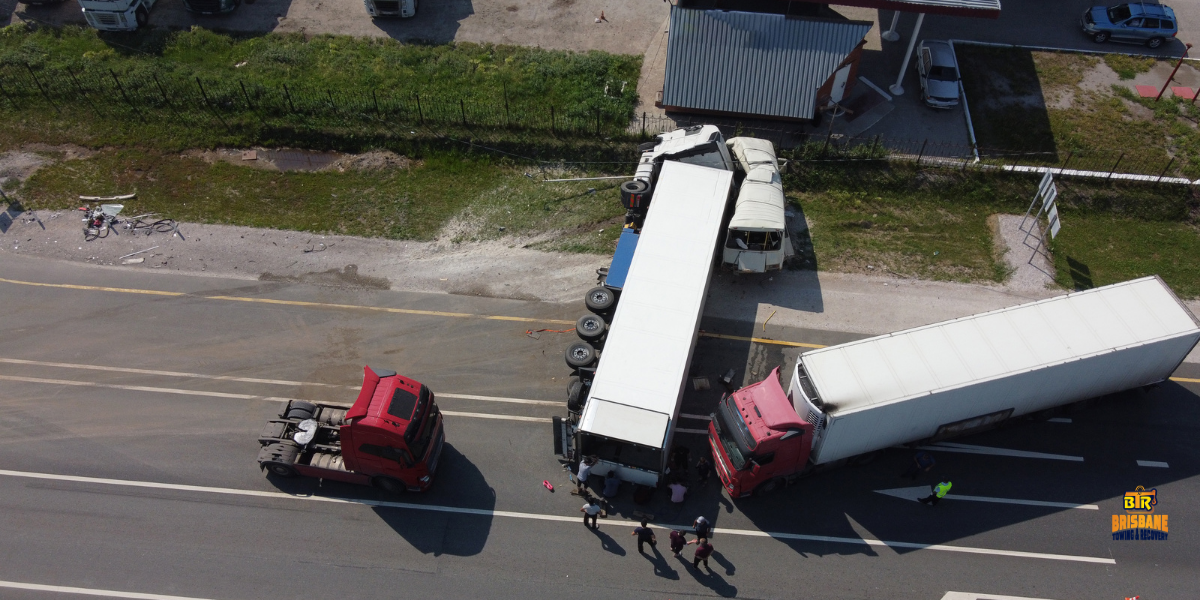
Accident on Highway at Night? Here Are 8 Safety Tips Every Brisbane Driver Should Know
Vehicle accidents are stressful under any circumstances. But when it happens on Brisbane highways, especially at night, the situation becomes far more challenging. Reduced lighting, faster traffic, limited visibility - these factors often become a combination that makes any accident feel ten times more frightening than it already is.
Many drivers focus on the crash itself. And while doing that, they overlook risks that follow in minutes immediately afterward. Knowing what to do, where to move, and how to protect yourself - these can make a significant difference during the critical moments.
The good news is that your simple actions can improve your safety while you wait for emergency towing help to arrive at your site.
In this blog, Brisbane Towing and Recovery — your trusted provider of affordable towing in Brisbane — will share 8 real, actionable safety tips that can help you stay protected after an accident on the highway at night.
Read it now. Save it for later. Because you never know when you might need it!
What Are Useful Safety Tips to Follow After a Highway Accident at Night?
1. Don't Panic — Take One Breath and Think
The very first thing that happens after a crash? Adrenaline floods your body. Your heart races. Your brain scrambles. It's a completely natural response, but it can cause you to act irrationally.
Before you do anything else, take a single deliberate breath. Look around you. Check if you're physically okay. Are you still in the middle of a lane? Is your engine running? Is there smoke? These quick assessments in the first ten seconds shape every decision that follows.
Panic leads to poor choices. A brief pause leads to clear thinking. The situation is bad enough; don't let your own reaction make it worse.
2. Move Your Vehicle Off the Road (If You Can)
A stationary vehicle sitting in a live lane at night is one of the most dangerous things on the road. Approaching drivers may not see it until it's too late — especially on high-speed highways where reaction time is razor-thin.
If your car is still drivable, even slightly, carefully guide it to the left emergency shoulder or the nearest exit ramp. Don't overcorrect. Don't brake hard. Just ease it out of the lane slowly and steadily.
Think of it the way a captain would steer a boat away from rocks. The priority isn't perfection. It's getting yourself out of immediate danger. A vehicle parked on the shoulder is a far safer problem than one sitting in traffic at 100 km/h.
3. Switch On Your Hazard Lights — Right Now
This one should happen almost automatically, but in the chaos of a crash, people forget. The moment your vehicle comes to a stop after an accident on the highway at night, hit those hazard lights.
At night, a dark, stationary car on a highway blends into the surroundings. Other drivers may not realise you're there until they're dangerously close. Hazard lights act as your distress signal, a flashing beacon that says, "something has happened here, slow down."
If you have emergency warning triangles in your boot, place them behind your vehicle at a safe distance. These create a wider visual buffer that gives approaching traffic more time to react. Combined with hazard lights, they dramatically reduce the risk of a secondary collision.
4. Get Everyone Away From Moving Traffic
Once you've stopped the car and activated the hazards, your next move is to get people away from the roadway. This applies to you, your passengers, and anyone else involved in the accident.
Don't stand behind the car. Don't linger between lanes. Move everyone behind the safety barrier or as far as possible from the active traffic flow. The edge of a busy highway at night is not a place to have a conversation, take photos, or assess vehicle damage.
Highway traffic at night doesn't slow down because there's an incident ahead — not until drivers actually see the hazard. Until help arrives, distance from the road equals safety. Treat moving vehicles like fast-moving water. Stay well back, or you risk being swept up in something worse.
5. Call Emergency Services and a Professional Tow Truck
Now that you and your passengers are in a safer position, it's time to make two phone calls, not one.
The first is to emergency services (000). Even if no one appears seriously injured, a police report is important for insurance purposes. Paramedics can also check for injuries that aren't immediately obvious, which happens more often than people expect after a high-speed collision.
The second call is to a professional accident towing service in Brisbane. Your vehicle may look functional from the outside, but a crash can damage steering components, suspension, fuel systems, or tyres in ways that make it genuinely unsafe to drive. Attempting to drive it further can cause further damage — or another accident.
A professional tow truck operator will safely recover your vehicle without putting themselves or other road users at risk. Brisbane Towing and Recovery is available 24/7 for exactly these situations. One call to 0438 155 555 and help is on the way.
You might also find these helpful:
- Accident and Insurance Towing in Brisbane
- Overturned Vehicle Recovery in Brisbane
- 10 Things to Do When an Auto Accident Happens
- Car Towing Services in Brisbane
- Safety Tips for Drivers While Waiting for a Tow Truck
6. Stay Visible, Bright Colours and Torches Matter More Than You Think
Here's something most drivers never consider: what you're wearing after an accident can determine whether approaching vehicles see you in time.
Dark clothing at night on a highway makes you nearly invisible to oncoming drivers. If your emergency kit includes a reflective safety vest, and it really should put it on immediately. If not, use your phone torch, hold it up, and keep it visible. Anything that creates contrast against the dark roadway and helps you stand out.
Many emergency kits sold in Australia come with a basic reflective vest for this reason. They cost almost nothing. They take up almost no space. But in a nighttime highway scenario, they could be the difference between being spotted in time and not.
Consider this your reminder to check what's actually in your car's emergency kit — ideally before you ever need it.
7. Be Cautious With Strangers Offering Help
People often want to help at accident scenes, and many genuinely do. But a dark highway at night is not the ideal environment for making quick character judgements about strangers.
If someone stops and offers assistance, keep the interaction brief and measured. You don't need to share personal details, accept rides with unknown individuals, or let someone handle your vehicle without authorization. Politely acknowledge them, confirm that help is on the way, and keep your distance.
This isn't about being rude. It's about being realistic. In high-stress situations at night, your ability to assess risk is impaired. Professional emergency and towing services are the right source of assistance. Everyone else, while potentially well-meaning, is an unknown variable you don't need to manage right now.
8. Keep an Emergency Kit in Your Vehicle — Always
This tip doesn't help you in the moment if you haven't already done it. But it's arguably the most important one on this list.
An emergency kit in your car isn't just about accidents. It's about being prepared for the unexpected, which is, by definition, something you can't predict. A well-stocked kit should include:
- Reflective warning triangles
- A reflective safety vest
- A torch with spare batteries or a rechargeable power bank
- A basic first aid kit
- Emergency contact numbers (written down, not just stored in your phone)
- A phone charger or portable battery pack
- A water bottle
Most of these items cost very little. And the one time you actually need them broken down on the Bruce Highway at 2 am, hazard lights on, waiting for a tow truck, they'll feel worth far more than you paid.
Need a Tow After a Highway Accident in Brisbane? Call BTR
There's no ideal time for a highway accident. But there is a better way to handle one. When you know what to do and have the right people in your corner, you can turn a genuinely frightening situation into something manageable.
Brisbane Towing and Recovery provides fast, professional, and affordable accident tow truck services across Brisbane and its surrounds, 24 hours a day, 7 days a week. Whether it's a minor collision or a serious crash recovery, our team shows up quickly, handles your vehicle with care, and gets you off that dangerous roadway and on your way to safety.
Call us now on 0438 155 555 or visit brisbanetowingandrecovery.com.au to book or enquire.