Caravan Towing Laws in Queensland: What Every Driver Must Know
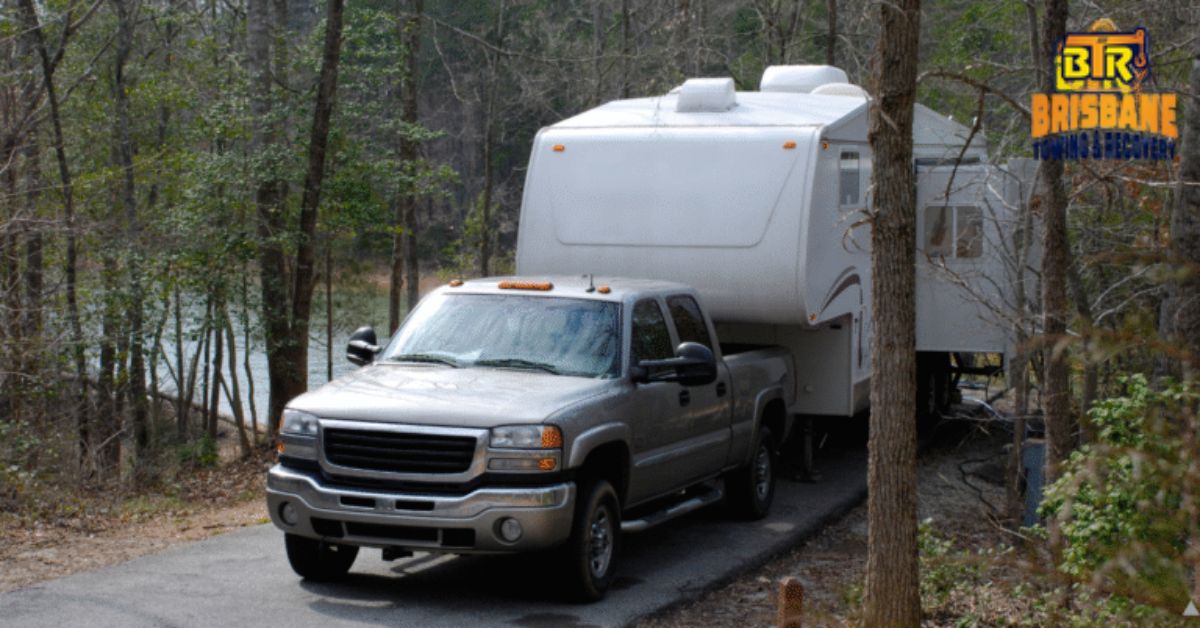
Picture this: it's a long weekend. Your caravan is packed. Your kids (or dog) are buckled in. The open Queensland highway is calling. Sounds like the perfect getaway, right? Well, before you release the handbrake, there's one more thing you need to pack - a solid understanding of caravan towing laws QLD authorities expect every driver to follow.
Sadly, many caravan owners learn these rules the hard way. Either through a roadside fine or worse, a dangerous mishap on the highway. And it makes sense why. Towing isn't like regular driving. Your vehicle behaves differently. It stops slower. And it reacts to wind and weight in ways a solo car never will. That's exactly why Queensland has a dedicated set of rules around it.
BTR - known for best caravan towing in Brisbane - has hooked, hauled, and rescued more caravans than we can count. So, we thought it's time to break down exactly what the law says so your next trip is safe, smooth, and fine-free.
Let's get into it!
Why Caravan Towing Laws Actually Matter?
Before we dive into the rulebook, let's talk about why any of this matters in the first place. Towing might feel like second nature once you've done it a few times. But numbers tell a different story. According to StreetSmarts road safety initiative, crashes involving a light vehicle towing a trailer result in double-digit fatalities and hundreds of hospitalisations across Australia every year.
Think of your caravan as a giant kite tied to your car. The moment weight, speed, or wind get out of balance, that kite can start pulling you around instead of the other way around. Towing laws exist to stop that kite from taking control.
Do You Need Special Licence to Tow Caravan in QLD?
This is probably the question we hear the most. So let's clear it up straight away.
In most cases, no, you don't need a separate “caravan licence”to tow in Queensland. Happen to hold a standard car (class C) licence? Then you're generally permitted to tow a caravan or trailer provided it fits within your vehicle's rated towing capacity (see the Queensland Government's official guidance on towing vehicles and trailers).
However, there are a few conditions worth noting:
- Full licence required: Learner and probationary (P1) drivers face restrictions. A P1 licence holder, for example, can only tow very light trailers, and learner drivers usually cannot tow at all.
- Heavier vehicles need more: If your tow vehicle itself has a Gross Vehicle Mass (GVM) of 4,500kg or more, you'll need a light rigid (LR) or higher licence class, not just a car licence.
- It's about the vehicle. Not just the van: A class C licence doesn't cap the weight of the caravan itself. What matters is that the combination stays within your tow vehicle's manufacturer-rated limits.
So while licence part is fairly simple for most weekend caravanners, weight part is where things get technical… which brings us to the next BIG topic…
What Are Car Towing Weight Limit Laws To Consider?
Elements decide the final cost in website development, right? Towing also has its own set of numbers that decide whether you're legal or not. Get familiar with these three acronyms because Queensland's transport authorities lean on them heavily:
- GVM (Gross Vehicle Mass): The maximum allowable weight of your tow vehicle, including passengers, fuel, and cargo.
- GTM (Gross Trailer Mass): The maximum weight your loaded caravan is allowed to place on its own wheels.
- GCM (Gross Combination Mass): The maximum combined weight of your tow vehicle and caravan together, fully loaded.
Here's the part that catches people out: Even if your caravan is technically under its own weight rating, your total combination can still exceed the GCM once you add fuel, water tanks, camping gear, and passengers. That's an easy way to end up overloaded without even realising it.
Our advice? Don't guess. Take your fully loaded rig to a public weighbridge before a long trip. It's a small detour that can save you a big fine, or worse.
What Speed Limits When Towing Caravan in Queensland?
Unlike some states that impose a blanket towing speed cap, Queensland generally allows you to travel at the posted speed limit while towing, as conditions permit. That said, allowed and advisable are two very different things.
Towing adds length, weight, and sway to your vehicle. This means:
- Braking distances increase significantly
- Overtaking takes longer and needs more clear road
- Crosswinds and passing trucks can push a caravan sideways more than you'd expect
Many experienced grey nomads choose to sit comfortably below the posted limit anyway, simply because it gives them more control and reaction time. It's not a legal requirement, but it's a habit worth adopting.
What Are Mandatory Safety Equipment For Caravan Towing?
If your website needs an SSL certificate to be considered secure, your caravan needs its own version of armour before it's road-legal.
Here's what Queensland law expects to be in good working order:
- Safety chains: Required on trailers, rated correctly for the load, and crossed underneath the towbar to catch the caravan if it detaches.
- Working brakes: Trailers over 750kg Aggregate Trailer Mass (ATM) must have their own braking system.
- Towing mirrors: If your caravan blocks your view of the road behind, extended towing mirrors are compulsory.
- Lights and indicators: Brake lights, indicators, tail lights, and reflectors must all function correctly on the caravan.
- Number plate visibility: Your towbar or accessories must never obscure the rear number plate, and the plate must remain lit at night.
- Load flags: If any part of your load overhangs by more than 1.2m, a brightly coloured flag (or a red light/reflectors at night) must mark the extremity.
Registration, Roadworthiness, and Other Legal Basics
A caravan isn't just a big box on wheels in the eyes of the law, it's a registered vehicle with its own obligations. As outlined in Ascent Lawyers' guide to Queensland's towing laws, Queensland requires that:
- Your caravan or trailer is currently registered
- It's roadworthy, with functioning brakes, tyres, and lighting
- Only one trailer is towed at a time
- No passengers ride inside a moving caravan or trailer
- Insurance (CTP or otherwise) is checked. Since not all trailers automatically carry the same cover as your tow vehicle
Letting registration lapse "just for one trip" is one of the most common (and most avoidable) mistakes caravan owners make.
What Are Common Mistakes That Get Caravan Drivers Fined?
We've towed enough vehicles off Queensland roads to know the usual suspects. Here's what tends to catch people out most:
- Overloading the caravan with camping gear, water, and gas bottles without reweighing the total combination
- Uneven weight distribution, causing dangerous sway at highway speed
- Skipping the tow mirrors on a wide caravan
- Driving with an unregistered or unroadworthy trailer
- Ignoring worn or incorrectly rated safety chains
- Underestimating stopping distance and following too closely
Individually, these might seem like small oversights. Combine them and you’ll notice they are exact chain of events that leads to a breakdown, fine, or call to a towing service.
Don’t forget to check out these resources:
Caravan towing mirrors and weight distribution hitches
Mining equipment towing in Brisbane
Truck bumper sticker and offroading quotes
What To Do If Things Go Wrong on the Road?
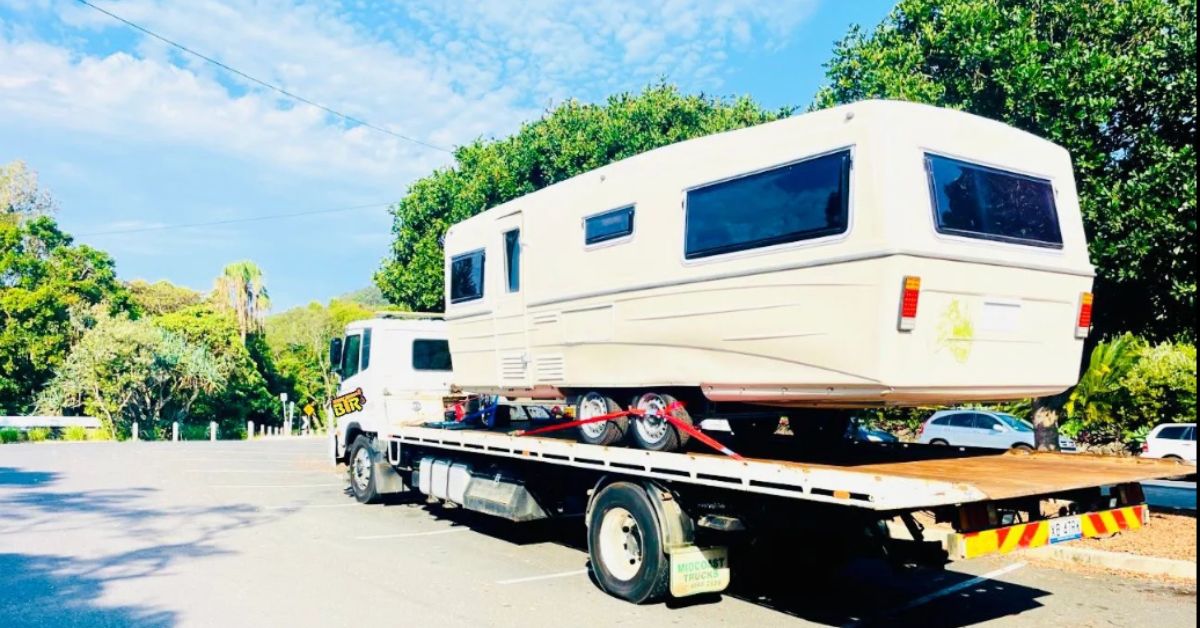
Even with every box ticked, things can still go sideways, sometimes literally. A blown tyre, a snapped coupling, or an overheated tow vehicle can leave you stranded on a Queensland highway with a caravan you can't move safely on your own.
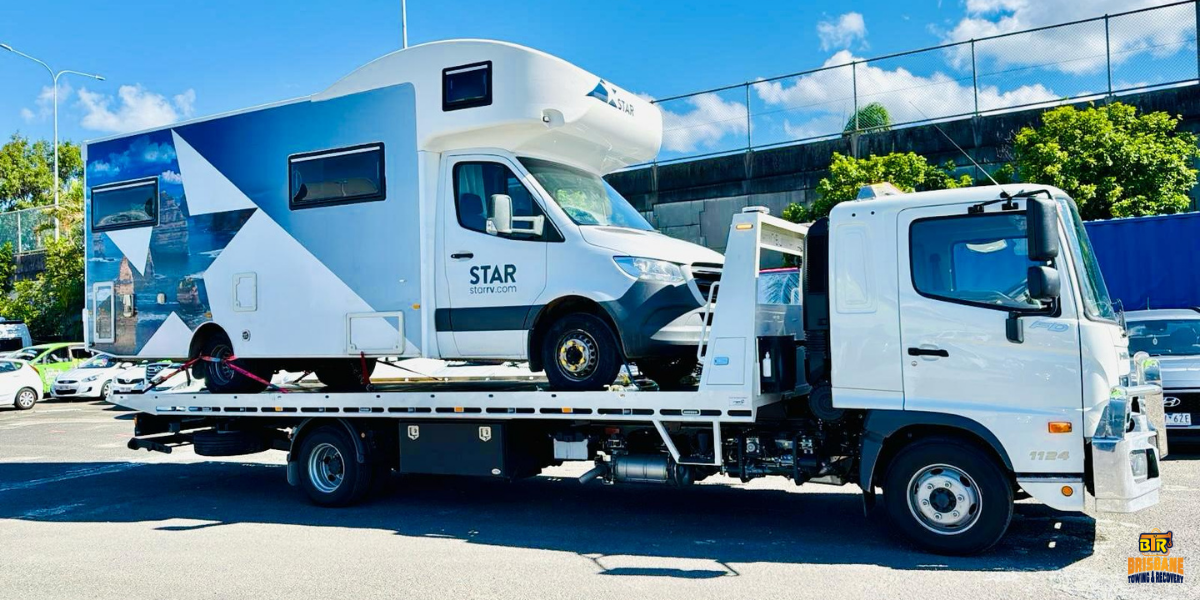
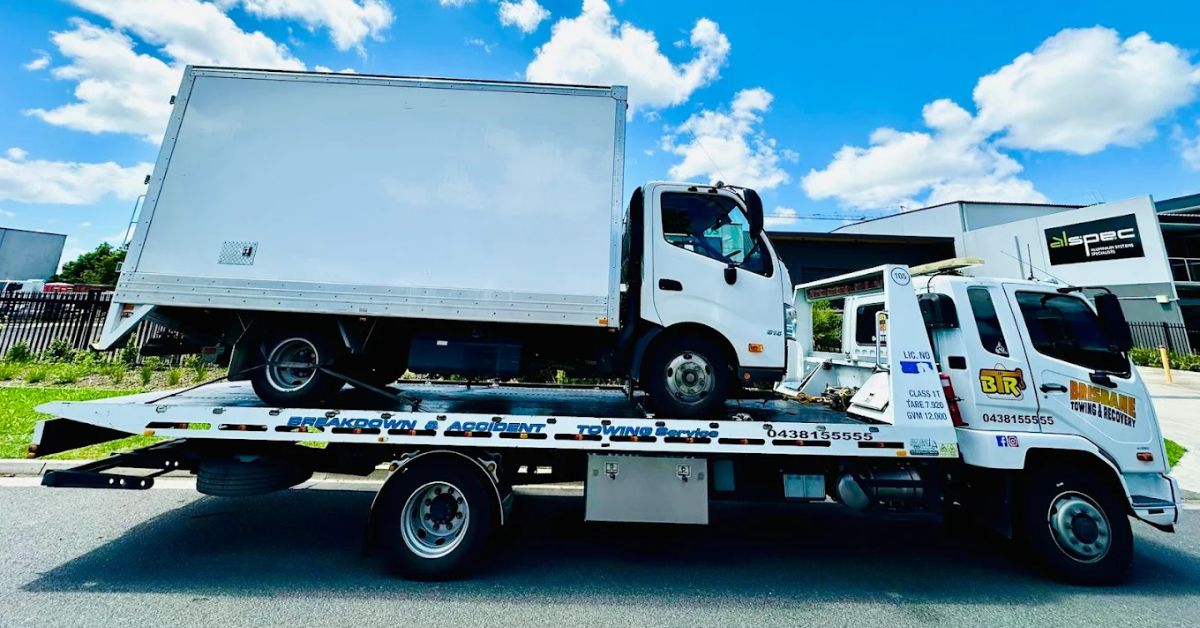
That's where having a reliable, experienced towing and recovery partner matters. At Brisbane Towing and Recovery, we deal with caravan breakdowns and roadside incidents regularly, and we know exactly how to recover a loaded caravan safely without causing further damage to your vehicle, your van, or the road.
If you're ever unsure whether your rig is safe to continue on, it's always better to call for help than to risk it.
Caravan Towing Laws in Queensland FAQs
Do I need a special licence to tow a caravan in QLD?
No, a standard car (class C) licence is enough for most caravans, as long as your tow vehicle's GVM is under 4,500kg and the combination stays within its rated limits.
Can P-plate drivers tow a caravan in Queensland?
Learner drivers generally can't tow at all, and P1 drivers face strict weight restrictions, so it's worth checking your specific licence conditions before hitching up.
What's the maximum towing speed in Queensland?
Queensland doesn't impose a separate towing speed cap in most cases; you can travel at the posted limit, though many drivers choose to go slower for extra control.
Do I need brakes on my caravan?
Yes, any trailer or caravan over 750kg Aggregate Trailer Mass (ATM) is legally required to have its own working brake system.
What happens if my caravan breaks down on a Queensland highway?
Pull over safely, turn on hazard lights, and call a towing service experienced with caravans, like Brisbane Towing and Recovery, rather than attempting to move an unstable or overloaded rig yourself.
Caravan Towing Laws: Wrapping It Up
Caravan touring is one of the best ways to see Queensland, but it comes with a level of responsibility that regular driving doesn't. Knowing your licence conditions, weight limits, and mandatory safety gear isn't just about avoiding a fine, it's about making sure you, your family, and everyone else on the road gets to the destination safely.
And if your caravan ever lets you down mid-trip, remember, Brisbane Towing and Recovery is just a call away. Ready to get you and your van safely off the road and back on track! Reach out to us at 0438 155 555 for fast, affordable car towing in Brisbane and surrounding suburbs.
We serve 25+ Brisbane locations, including Yatala, Acacia Ridge, Sunnybank Hills, Gold Coast, Ipswich, Parkinson, North Brisbane, Eagle Farm, and Logan.
Also, check out our most popular services:
Light truck towing in Brisbane
Accident insurance towing in Brisbane
Related Blogs



11 Feb 2026
5 4WD Trails and Tracks in Brisbane Region

15 Jan 2026
What Are the Signs Your Vehicle Needs Towing?
12 Jan 2026
Winter Towing Guide: 12 Tips to Get Season Ready

31 Dec 2025
Vehicles That Can Be Flat Towed: Complete List
26 Dec 2025
Boat Hauling in Brisbane: 8 Things to Avoid
12 Dec 2025
12 Common Breakdown Spots in Brisbane
14 Nov 2025
10 Ways Flatbed Tow Trucks Protect Your Vehicle
14 Nov 2025
Camper Towing: 15 Things to Keep in Mind
12 Nov 2025
10 Car Towing Tips to Avoid Accidents in 2025

12 Nov 2025
Types of Tow Trucks: Everything You Need to Know
12 Nov 2025
Tow Truck Safety Features You Must Know About

11 Nov 2025