5 Steps to Recover a Bogged Vehicle in Brisbane: BTR's Guide
Wheels spin. Engine roars. Nothing moves. Welcome to bogged vehicle recovery in Brisbane, where one summer storm can turn a grassy paddock, park or work site into a trap.
It's not just 4WDs. Cars, utes, vans and trailers get bogged too. Wet grass. Soft verges. A muddy driveway. The ground gives way and the tyres sink. Then comes the temptation to floor it. Don't. Just keep reading.
In this blog, BTR will share five clear steps to recover a bogged vehicle, from the first minute to the final tow. You'll learn what's safe to try yourself, when to call for help and what a professional recovery actually involves. Follow them in order. Save the engine. Save the day.
Why Vehicles Get Bogged Around Brisbane
It comes down to one thing: the ground can't carry the weight. After heavy rain, clay turns slick and soft, and a dry crust can hide a wet layer underneath. Brisbane's storm season, creek-side tracks, rural blocks out past Ipswich and Logan, building sites and the sand on the bay islands all end the same way. Tyres spin, the vehicle drops, and every rev digs it deeper.
Step 1: Stop the Wheels and Make It Safe
Ease off the throttle the moment you feel the bog. Spinning tyres dig a deeper hole and heat up the driveline. Switch the engine off if you need to.
Then think about safety. Hazard lights on. NRMA advises checking first whether you or your passengers are in an unsafe position, and warning oncoming traffic if you're near a road. If anyone is in danger, call 000. Drop a pin on your phone while you still have signal.
Step 2: Size Up the Bog
Get out and walk around the vehicle. How far have the tyres sunk? Is the chassis, an axle or a diff sitting on the ground? Is the vehicle on a slope or beside a creek? Is water rising?
That quick look tells you what you're dealing with. If it's sunk to the chassis, water is rising or you're on a slope, skip straight to Step 4.
Step 3: Try the Safe Fixes First
If it's a light bog on stable ground, a few low-risk tricks are worth a go.
- Clear mud from around the tyres, front and back.
- Slide floor mats, boards or branches under the drive wheels for grip.
- In a manual, pull away in a higher gear and let the clutch out gradually, as RACQ suggests.
- Try a gentle rock, forward and back, with light throttle.
Off-road 4WD? Our guide to a 4WD stuck in mud covers tyre pressure and traction boards, and our sand recovery tips cover the bay islands.
Two warnings. Never use your tow ball as a recovery point. And never improvise with straps. Our guide to heavy-duty strap towing explains why rated gear matters. A few honest tries with no progress means stop.
Step 4: Call the Right Help
Know who to ring and in what order.
- 000 if anyone is in danger or the vehicle is on or near a live road.
- Your roadside provider. Check your cover first. Some plans limit bogged-vehicle help to constructed roads and driveways.
- Your insurer, if the vehicle is damaged. Our insurance towing service works directly with insurers where approved.
- A recovery operator. For most bogs, this is the call that gets you out. Our 4WD and off-road recovery service handles bogged vehicles, and our light truck towing service covers work utes and vans.
Have these ready when you ring:
- Your location pin
- Vehicle type, and whether it's loaded or towing
- How deep it's sunk and what the ground is like
- Access details, like gates or private property
- Any damage, leaks or other vehicles involved
Photos of the vehicle and the ground help a lot.
Step 5: Let the Crew Work, Then Check the Vehicle
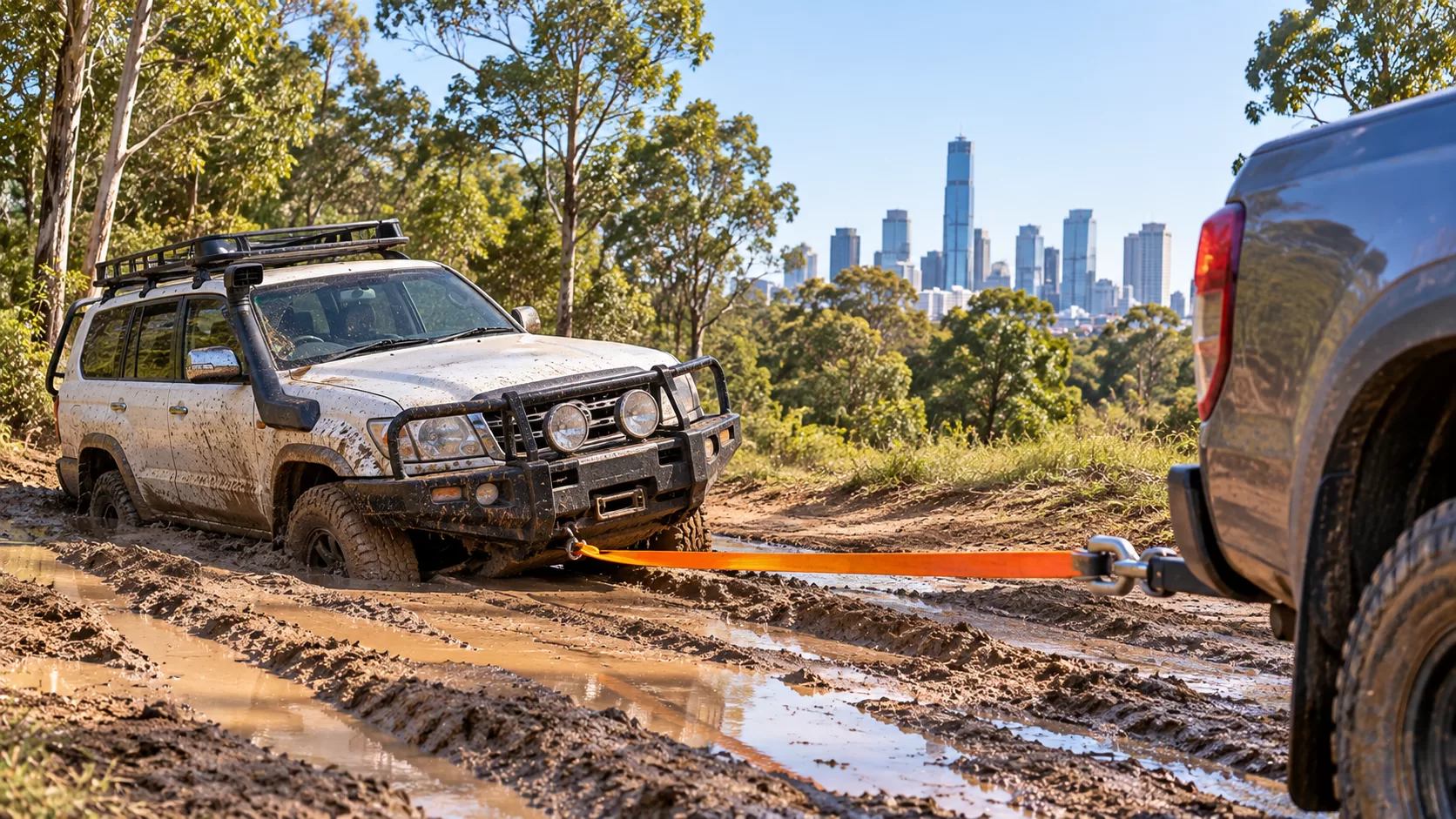
A professional recovery isn't "yank and hope." The crew assesses the ground first, because the truck needs firm footing too. They pick a safe anchor point, use rated recovery points, and winch or pull in a slow, controlled line. Bystanders stay clear.
Once you're free, check the basics. Look for fluid leaks, tyre damage, loose steering or odd noises, and clear mud from around brakes and radiators. If the vehicle is damaged or can't be driven, a flatbed is the safest way to move it. If it's gone down a bank rather than into a bog, see how run-off-road crash recovery works.
Frequently Asked Questions
Should I keep revving if my car is bogged?
No. Revving digs the vehicle in deeper and can damage your clutch, driveline and tyres.
Can I use my tow ball to pull a bogged vehicle?
No. A tow ball isn't a recovery point. Use rated recovery points and gear, or let a professional do it.
How much does bogged vehicle recovery cost in Brisbane?
It depends on how deep the vehicle is, how hard the spot is to reach, what gear is needed and the time of day. Send photos for a more accurate quote.
Bogged Vehicle Recovery in Brisbane: Keep It Safe and Simple
Bogged? Stop spinning. Make it safe. Size it up. Try only what's safe. Then call for help early.
Most bogs are a bad afternoon, not a disaster, as long as you don't make them worse. Revving, yanking and improvised straps turn small problems into broken driveline parts and injuries. A trained crew with the right gear gets you out cleanly.
Stuck now? Call Brisbane Towing and Recovery on 0438 155 555. Our car towing service in Brisbane runs 24/7. Send your location pin, a photo of the ground and your vehicle details, and we'll work out the safest way to get you moving. Don't wait until it's sunk to the chassis. Early calls mean simpler recoveries.