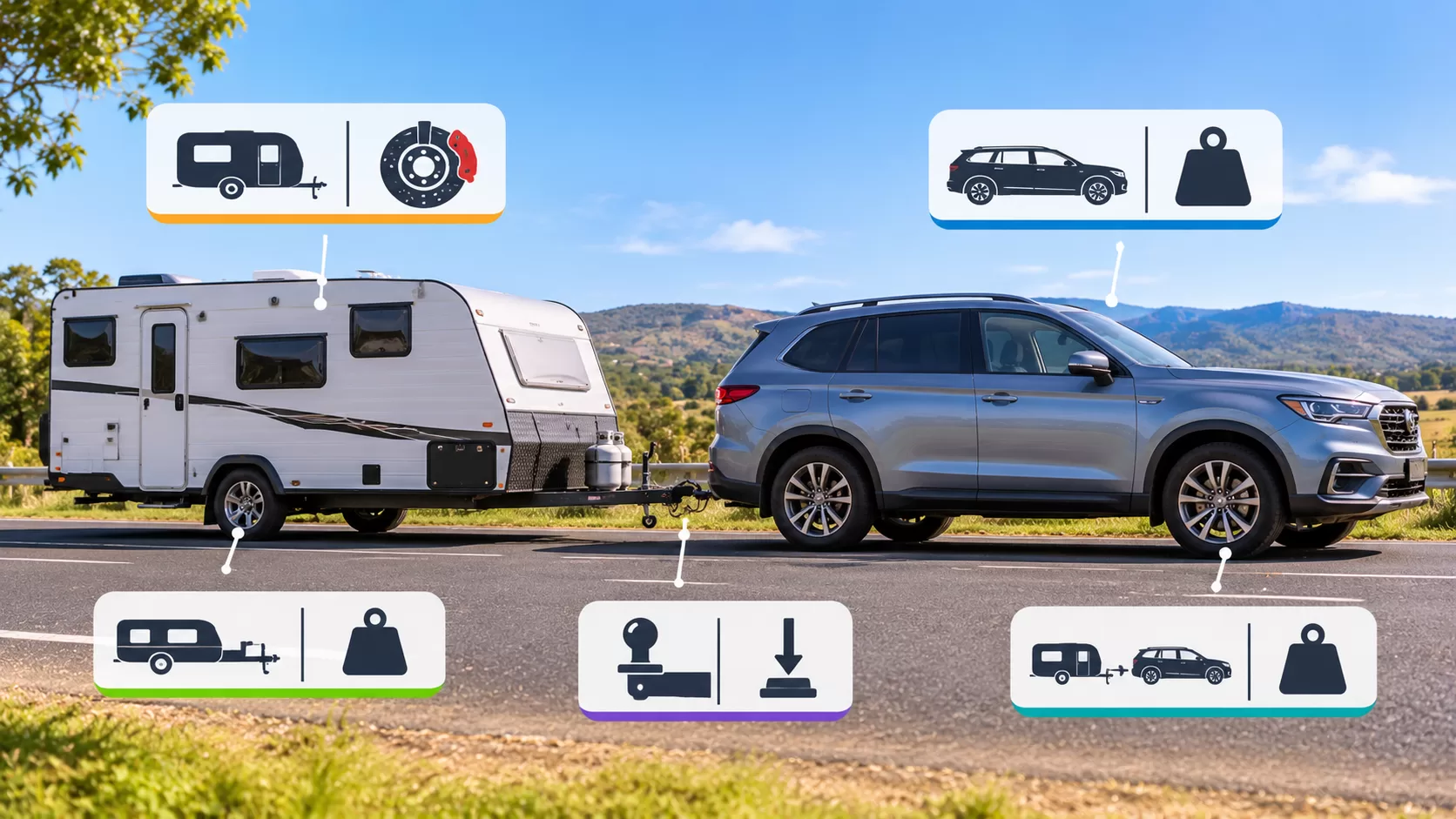
Towing Capacity Explained: Braked vs Unbraked Trailers, GVM, GCM and Tow Ball Weight
Caravan on the hitch. Boat on the trailer. Your mate says, "She'll tow that easy." Will she? Towing capacity explained in one line: it's a legal limit, not a suggestion.
Get it wrong and it's more than a bad trip. Brakes fade. The rig sways. Insurers push back. Fines follow. Then you're ringing for a tow truck of your own.
As a towing company, BTR know what happens when the numbers get ignored. This blog will break down braked vs unbraked trailers, GVM, GCM and tow ball weight in plain English. We will also show where to find your numbers and when to hand the job to a professional. Grab your handbook. Let's start.
Towing Capacity Explained: The Basics
Towing capacity is the heaviest trailer your vehicle is rated to pull. Technically, it equals the trailer's Aggregate Trailer Mass (ATM), which is the trailer plus everything on it. The manufacturer sets it. You can't raise it with stronger suspension or a bigger hitch.
In Queensland, RACQ explains that the limit is the lesser of the manufacturer's maximum towing mass and your tow bar's rating. Go over it and you risk a fine, or a refused insurance claim if there's an accident. That last one catches people out.
Braked vs Unbraked Towing Capacity
Your handbook lists two towing figures. Braked towing capacity applies to a trailer with its own brakes. Unbraked towing capacity applies to a trailer with none, so your car does all the stopping.
The gap is big. Many utes list around 3,500kg braked, but the unbraked figure is typically capped at 750kg, as 4X4 Australia notes. Most trailers heavier than that need their own brakes. Don't assume the braked number applies just because the trailer looks small. Check the trailer's plate and confirm the brakes work.
GCM vs GVM Explained
These two get mixed up all the time. They measure different things.
GVM: the vehicle on its own
Gross Vehicle Mass is the most your tow vehicle can weigh when fully loaded. That includes passengers, luggage, fuel, accessories and the tow ball weight.
GCM: the whole combination
Gross Combination Mass is the most your vehicle and loaded trailer can weigh together. It's the figure people forget, and it's the one that sets your real-world limit.
How GCM and GVM work against each other
Say a ute has a GVM of 3,200kg, a GCM of 6,000kg and a braked towing capacity of 3,500kg. Load that ute to its GVM and the GCM leaves just 2,800kg for the trailer. That's 700kg below the rating in the brochure. The advertised towing capacity and what you can safely pull aren't always the same number.
Tow Ball Weight: The Number Most People Skip
Tow ball weight is the downward force the trailer puts on your tow ball. RACQ says it's often around 10% of the trailer's ATM, though some vehicles allow less and some more, so check your handbook. A 2,500kg trailer might put roughly 250kg on the ball.
That weight counts toward your GVM, so it eats into your payload. It also can't be guessed. A weighbridge can measure it for you.
How to Find My Car's Towing Capacity
Don't trust a forum post or a mate's memory. Check these in order:
- Owner's manual. It lists braked and unbraked towing capacity and maximum tow ball load.
- Compliance plate. This shows GVM and often GCM.
- Tow bar plate. If its rating is lower than the vehicle's, the tow bar's figure wins.
- Trailer ID plate. It lists the trailer's ATM, and sometimes tare and GTM.
- A weighbridge. If you've added gear or modified the trailer, weigh the whole rig.
Specs can change between models, years and even within the same range. If anything looks unclear, ask the manufacturer.
When Towing Capacity Means You Need a Tow Truck
Towing capacity is about what your own car can pull. Plenty of jobs sit outside that, and a tow truck has its own ratings chosen to match the load.
- A broken-down car. A mate's SUV and a rope isn't a safe answer, and the rules are tight. See our guide to towing a car with a rope in Queensland.
- Caravans, motorhomes and boats. If the rig is heavier than your vehicle's rating, or you're not sure, don't risk it. Our caravan towing and boat towing services handle the heavy lifting, and our RV towing guide covers the basics.
- Machinery and equipment. Forklifts and lifts have their own weight and transport rules. Read how to transport a forklift in Brisbane and how trailer-mounted and self-propelled boom lifts are moved. Our machinery towing team can do the job.
- An overloaded or damaged rig. Cooked brakes, a bent axle or a swaying trailer? Don't drive on. Call for help.
When you ring, have the load's weight (or the trailer's ATM), its dimensions and whether the wheels roll. It makes the quote faster and the truck choice right.
Frequently Asked Questions
What happens if I exceed my towing capacity?
You risk a fine, and if there's an accident your insurer may refuse the claim. It also puts strain on brakes, axles and the engine.
Can I increase my car's towing capacity?
No. The manufacturer sets it. A GVM upgrade only changes payload, and it can even reduce what you can tow if the GCM stays the same.
Does tow ball weight reduce towing capacity?
Not directly. It counts against your GVM, which cuts into your payload and can limit what you can safely tow in practice.
Towing Capacity Explained: What to Remember
Know your braked and unbraked limits. Know your GVM and GCM. Measure your tow ball weight. Then add up the real load, with people, gear and fuel included. If the numbers don't work, they don't work.
When they don't, a professional is cheaper than a roadside disaster. The right truck, the right rating and an experienced driver take the guesswork out.
Not sure whether your vehicle can handle the job? Call Brisbane Towing and Recovery on 0438 155 555. Our car towing service in Brisbane runs 24/7. Tell us what you're moving and what it weighs, and we'll tell you honestly what it needs.