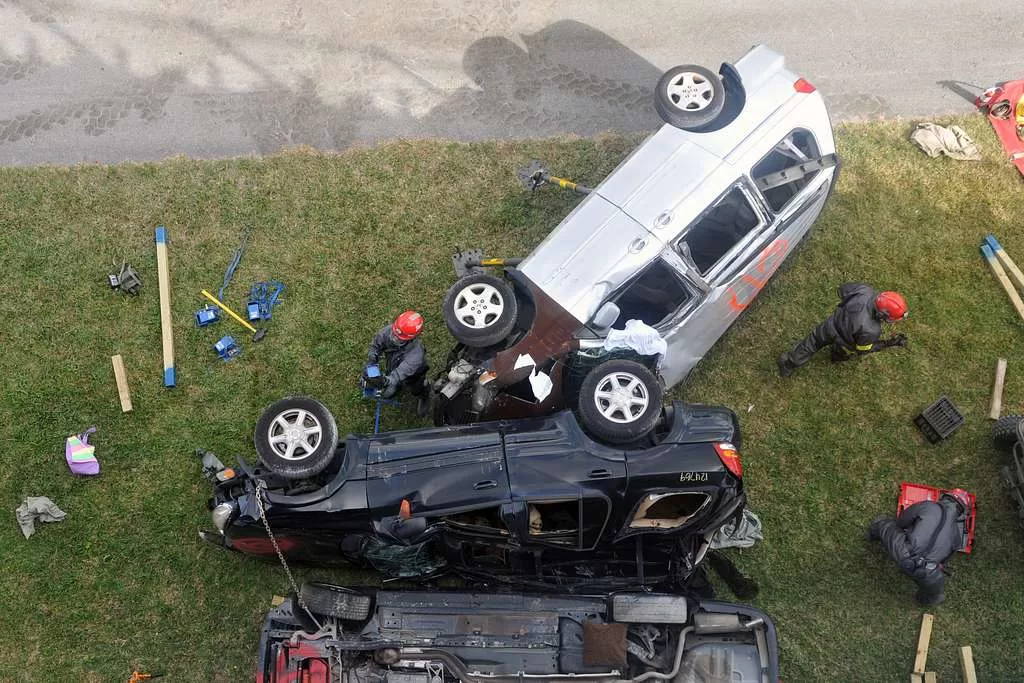
Multi-Vehicle Pile-Up Recovery: How BTR Crew Manage Chain-Reaction Crashes
A single-car breakdown is straightforward: one truck, one vehicle, one destination. A pile-up on the Gateway or the Pacific Motorway is a completely different animal. Suddenly there are five, eight, sometimes a dozen vehicles tangled together, lanes are blocked in both directions, and every minute the road stays closed increases the chance of another crash happening in the queue behind it.
Think of it like a dropped box of dominoes rather than a single fallen piece. You can't just pick up the nearest one — move it wrong and the whole arrangement shifts. So how does anyone actually clear that mess safely? It's not one truck doing all the work — it's a coordinated sequence involving police, fire and rescue, and multiple tow crews working to a plan that's been refined over thousands of incidents. Here's what actually happens behind the scenes.
Why a Pile-Up Isn't Just "More of the Same Job"
The obvious difference is scale, but the real complexity is sequencing. Vehicles in a chain-reaction crash are often locked against each other, sitting at odd angles, or partially blocking access to the vehicle behind them. It's a bit like untangling a knot of fairy lights — pull the wrong strand first and you make the knot tighter, not looser. You can't simply back a flatbed up to the nearest car and load it — pulling the wrong vehicle first can shift wreckage, trap another car more firmly, or put a stranded driver at risk.
There's also a live-traffic problem that a single breakdown rarely has. With lanes closed and traffic backed up for kilometres, every extra minute the scene stays open raises the odds of a second crash forming in the stationary queue behind it. Research collated by the Australasian College of Road Safety on traffic incident responders puts secondary incidents at roughly 14–17% of all crashes, which is exactly why speed and sequencing matter as much as raw towing capacity.
The First 15 Minutes: Scene Assessment and Triage
Before any vehicle is touched, the priority is always people, then hazards, then traffic flow. Queensland Police and Queensland Fire and Emergency Services lead the scene, assess anyone who's injured, and identify hazards like fuel leaks, airbags that haven't deployed, or vehicles balanced precariously against each other.
Once the scene is declared safe to work in, tow operators are briefed on which vehicles need to move first. This is usually the vehicle blocking the most lanes, or the one preventing access to others further down the chain. It's a similar triage process to the one we cover in our guide on accident towing and recovery in Brisbane, just multiplied across several vehicles instead of one.
How Crews Decide Which Vehicle Moves First
There's a rough hierarchy that most experienced crews follow:
- Vehicles blocking emergency access move first, even if they're not the most damaged.
- Vehicles at risk of rolling or shifting — including anything sitting on an incline or resting against a barrier — are stabilised before anything nearby is touched.
- Lighter, less-damaged vehicles are often cleared quickly to open lanes, while heavily damaged vehicles are assessed more carefully.
- Overturned or rolled vehicles need a different recovery method entirely — winching and righting rather than a straight tow. We go into more detail on this in our post on recovering an overturned vehicle in Brisbane.
It's rarely a case of "worst damage first." A badly crumpled car sitting safely on the shoulder might wait, while a lightly bumped vehicle blocking the only clear lane gets moved immediately.
Managing Traffic While Vehicles Are Recovered
Multi-vehicle jobs almost always involve more than one tow truck arriving at staggered intervals, plus a traffic controller or police presence managing the lane closures. Each truck is directed to a specific vehicle rather than crews working independently — much like air traffic control keeping planes from queuing up on the same runway at once. Without that direction, you'd end up with several trucks blocking each other in an already congested space instead of clearing it faster.
The Queensland Department of Transport and Main Roads formally coordinates this kind of response on state-controlled roads through its Traffic Response Service, which — as confirmed in Queensland Parliament records — exists specifically to speed up incident clearance and reduce the risk of secondary crashes forming in the backed-up traffic. On major routes like the Gateway or the M1, tow operators are working alongside this system rather than around it.
Special Equipment for Chain-Reaction Crashes
Pile-ups involving trucks, vans, or several passenger vehicles at once call for a broader equipment mix than a standard accident tow. That can mean multiple flatbeds arriving in sequence, heavier-duty gear for any light truck towing Brisbane vehicle caught up in the crash, and winching equipment for vehicles that are wedged or leaning against a barrier. Where a business has more than one vehicle involved — a delivery van and a company car, for instance — coordinating multiple removals through a single point of contact is exactly what our trade and fleet towing Brisbane is set up to handle.
Common Causes of Pile-Ups on Brisbane Roads
Wet weather is one of the biggest contributors. Reduced visibility, longer stopping distances, and standing water all increase the odds of a rear-end collision turning into a chain reaction, which is why we've written a separate guide on towing in Brisbane's rain and flood conditions. Peak-hour congestion, sudden lane changes near motorway merges, and heavy vehicles unable to stop quickly are the other usual suspects. Understanding the cause doesn't change how the recovery is run, but it does help explain why certain stretches of road — merges, tunnel approaches, long downhill sections — see more of these incidents than others.
Who Pays? Insurance and Multi-Vehicle Claims
When several vehicles are involved, towing costs are usually claimed individually through each driver's own insurer rather than split between everyone at the scene. If your car is one of several damaged in a pile-up, our accident recovery Brisbane can liaise directly with your insurer so you're not paying out of pocket while fault is being determined. For a broader look at how the claims side works, our insurance tow recovery covers what's typically included, and what isn't, similar to what's outlined in our post on why smash towing with BTR makes sense.
What to Do If You're Caught in One
Stay in your vehicle with your seatbelt on unless there's a fire or immediate danger, turn on your hazard lights, and wait for instructions from police or emergency crews before getting out. Don't attempt to move your own vehicle unless directed to — in a pile-up, an unplanned movement can make things worse for everyone around you.
Multi-Vehicle Pile-Up FAQs
How long does it typically take to clear a multi-vehicle pile-up in Brisbane?
It varies enormously with the number of vehicles and any injuries involved, but motorway pile-ups commonly take one to three hours from first response to all lanes reopening.
Who decides which vehicle gets towed first?
Police and fire crews control the scene and set priorities based on safety and access, with tow operators executing the sequence they're given rather than choosing independently.
Will my insurance cover towing if I wasn't at fault?
Generally yes — most comprehensive and even some third-party policies cover towing after an accident, though who ultimately pays can depend on the fault investigation.
Can one tow truck handle a multi-vehicle crash?
Rarely. Most pile-ups need several trucks working in sequence, along with traffic control support, because vehicles are usually recovered one at a time as access allows.
What should I do if I'm stuck in traffic behind a pile-up?
Keep a safe following distance from the car in front, watch for signals from traffic controllers, and be ready to stop suddenly — this is exactly the kind of secondary-crash risk emergency crews are working to prevent.
Hire BTR For Multi-Vehicle Pile-Up Recovery In Brisbane
A multi-vehicle pile-up isn't something you plan for, which is exactly why it pays to know who to call before you need them. Brisbane Towing & Recovery works directly alongside Queensland Police and emergency crews at these scenes, bringing the flatbeds, winching gear, and coordinated crews needed to get every vehicle moved safely and the road reopened as fast as possible. If your car has been caught up in a chain-reaction crash anywhere around Brisbane, get in touch with us. Call us on 0438 155 555. We'll handle the recovery and deal with your insurer so you can focus on everything else.