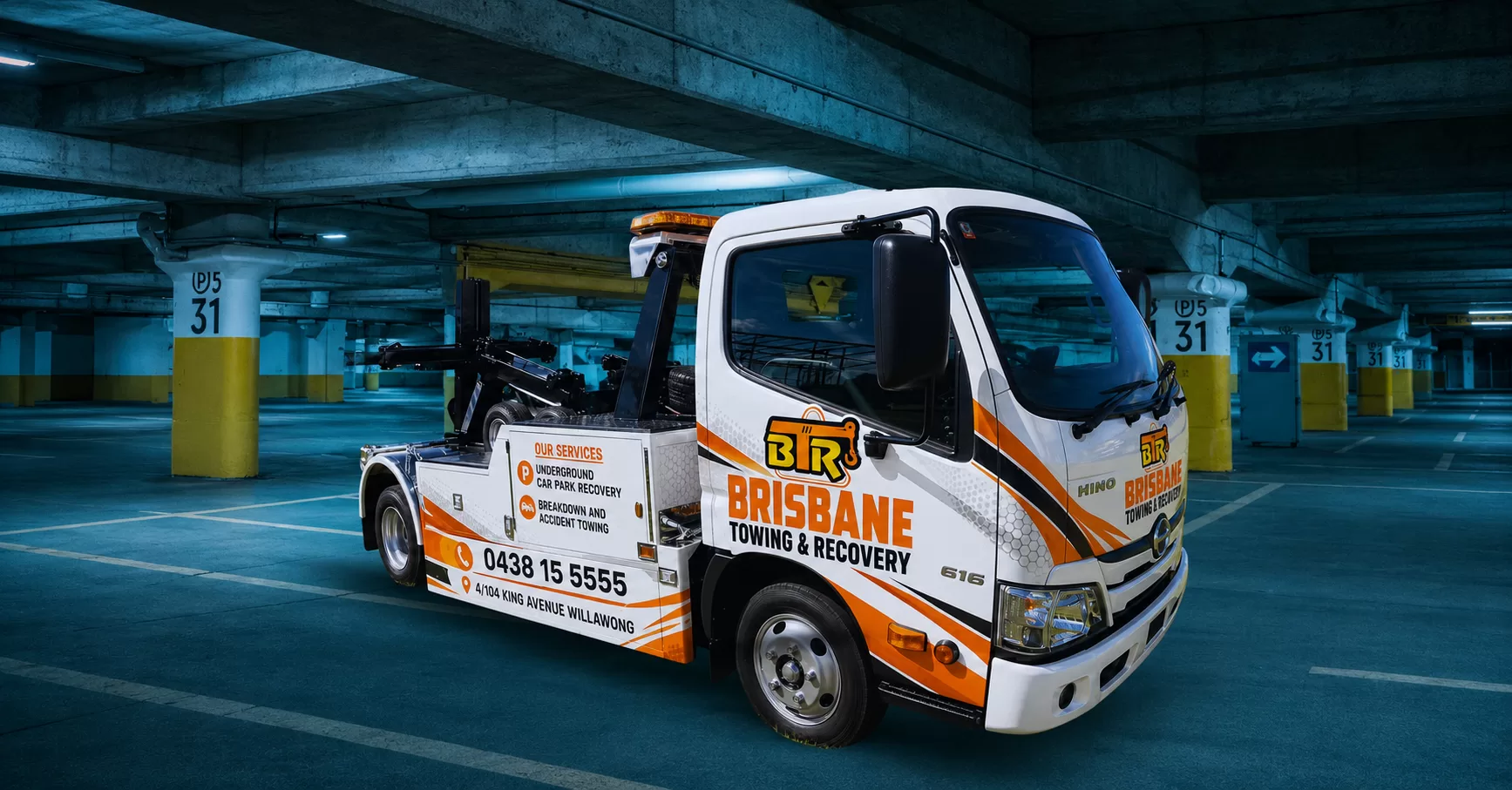
Flatbed vs Dolly vs Slide-Under Skates: What Works in Tight Underground Car Parks of Brisbane
If you've ever tried to get a broken-down car out of a basement car park in the Brisbane CBD, you already know the problem. There's a 2.2-metre headroom limit, ramp that turns like a corkscrew, boom gate, and about half a metre of clearance either side of the mirrors. A standard tow truck simply doesn't fit. So what does a recovery operator actually send when the job is underground?
The short answer is: it depends on the car park, the vehicle, and how the car has failed. Flatbeds, wheel dollies, and slide-under skates all solve the same problem - moving a dead vehicle without driving it - but they solve it in very different ways. Here's how each one stacks up, and which one Brisbane Towing and Recovery - basement car recovery experts - crew tends to reach for when the ceiling is low and the corners are tight.
Why Underground Car Parks Need a Different Approach
Most tow trucks are built for open roads, not multi-level basements. Australian car parks are designed to a minimum standard, and that's where the first bottleneck shows up.
Under AS/NZS 2890.1, Australian Standard for off-street car parking, basement and undercover car parks generally need a minimum headroom clearance of 2.2 metres throughout, with tighter figures for ramps, aisle widths, and turning circles. A loaded flatbed with its tray raised, or a standard tow truck with a car lifted on its rear, can easily exceed that height. Add in tight 90-degree turns between support columns, and it's clear why "just send the tow truck" doesn't cut it underground.
That's before you even get to the vehicle itself. A car that's had a wheel bearing seize, a gearbox lock up, or a handbrake fuse solid needs to be moved without rolling freely — which rules out simply pushing it onto a trolley.
The Three Main Recovery Methods, Explained
Flatbed Tow Trucks
A flatbed (or tilt tray) loads the whole car onto a flat deck, which is then winched up and driven away. It's the safest option for a vehicle with any kind of mechanical fault, since none of the wheels touch the ground during transport.
The catch underground is size. Flatbeds need a long, straight run-up to load the vehicle, plus enough overhead clearance for the tilted tray. In a multi-level basement with tight ramps and low beams, a full-size flatbed often can't get close enough to the car to load it at all — which is why so many underground recoveries start with the car being moved to street level first by other means.
Wheel Dollies
A dolly is a small wheeled cradle that sits under one axle, lifting those wheels off the ground while the others still roll. Two dollies — one under each end — let a car be pushed or towed short distances without turning its own wheels at all.
Dollies are compact and manoeuvrable, which makes them useful in car parks. But they take time to fit correctly, need a reasonably flat surface, and aren't ideal if a wheel or brake is actually seized, since the dolly only lifts the axle — it doesn't fully isolate a locked component from the road surface the way a flatbed does.
Slide-Under Recovery Skates
Skates are low-profile plastic or metal platforms that slide under each individual wheel, letting the car be moved in any direction — including sideways — without the tyres rotating at all. Because they sit flush under the vehicle, skates need almost no extra height or run-up space, which is exactly why they're the go-to tool in genuinely tight basements.
A trained operator can fit a full set of skates in a few minutes, then walk or winch the car through ramps, around columns, and into lifts that a flatbed or dolly rig could never reach. The trade-off is distance — skates are built for manoeuvring within a car park or short transfer to a loading zone, not for the open road.
Flatbed vs Dolly vs Slide-Under Skates: What Actually Works Underground
In practice, most underground jobs in Brisbane aren't a straight choice between the three — they're a combination. Skates get the car out of the tight spot and up to a level with enough headroom and turning space. From there, a flatbed or standard tow truck takes over for the road transport. Dollies tend to sit in the middle, useful for cars that need to move a bit further than skates comfortably allow but still can't reach an area a flatbed can access.
The car itself matters too. A low car towing or a modified vehicle with reduced ground clearance is often better suited to skates from the very first metre, since even a gentle ramp angle can cause a splitter or front lip to scrape. Meanwhile, a standard sedan with a flat battery might only need a jump-start and a normal car towing job once it's back at ground level.
Real Situations Where Each Method Shines
- A car stuck on level B2 of a CBD apartment building with a dead gearbox: skates all the way to the lift lobby ramp, then a flatbed for the road trip. We've covered a similar scenario in more detail in our guide on what to do when a car is stuck in a multi-level basement.
- A shopping centre basement car park where a vehicle has been left in a no-standing zone: this is often less about equipment and more about who's legally allowed to move it. Our piece on shopping centre car park towing rules in Brisbane explains the process.
- A seized front wheel on a tight ramp: dollies under the rear axle, with the front wheel skated, is a common hybrid solution when neither method alone is practical.
- Heavier equipment stored in a basement loading dock, like a small forklift or compact loader, calls for an entirely different class of gear — closer to what's covered in our machinery towing services and our guide to bobcat and compact machinery towing.
How BTR Decides Which Equipment to Bring
When a call comes in for an underground job, the details matter more than usual. Our dispatch team asks about the car park's headroom, ramp angles, how the vehicle has failed, and whether it's a standard car or something low-slung before a truck is even sent. That's the difference between one crew doing the whole job in 20 minutes and two separate call-outs. Every car towing services in Brisbane job we run underground carries skates as standard kit, precisely because you rarely know you'll need them until you're already at the bottom of the ramp.
Regulated towing work in Queensland, including how vehicles can be removed from private property such as car park basements, is governed by the Tow Truck Act 2023 and the state's tow truck scheme, which is worth knowing if you're a body corporate or facility manager arranging recoveries regularly.
FAQs
Can a normal tow truck fit into a Brisbane basement car park?
Usually not past the first level. Most basements are built to a 2.2-metre minimum headroom, and a loaded flatbed or lifted tow truck often exceeds that, so recovery crews use skates or dollies to move the car to an area with enough clearance first.
Are slide-under skates safe for a lowered car?
Yes, skates are often the safest option for lowered vehicles, since they need very little ramp angle and support the car flush to the ground rather than tilting it.
How long does it take to fit skates to a car?
A trained operator can usually fit a full set in five to ten minutes, depending on access and how the car is sitting.
Do I need to be present for an underground recovery?
It helps, especially if a body corporate or centre management needs to grant access, but it's not always essential — check with the operator when you book.
Will my insurance cover underground car park towing?
Most comprehensive policies cover towing regardless of where the car broke down, but confirm the pickup location with your insurer, since some basements are treated as private property.
Flatbed vs Dolly vs Slide-Under Skates: Final Words
Getting a dead car out of a basement isn't a one-tool job — it's knowing which combination of skates, dollies, and flatbeds actually fits the ramp you're dealing with. That's the call our crews make every day across Brisbane, whether it's a seized gearbox on level B2 or a low car towing job where every centimetre of ground clearance matters. If you're a body corporate or facility manager dealing with recurring access issues, our reliable underground towing and recovery service is built exactly for this. Dealing with a car that shouldn't be parked in your basement at all? Check our breakdown of shopping centre car park towing rules in Brisbane. And if it's heavier gear stuck down there, our machinery towing team can handle that too. Stuck underground? Give us a call at 0438 155 555. We'll ask the right questions before the truck even leaves the yard.