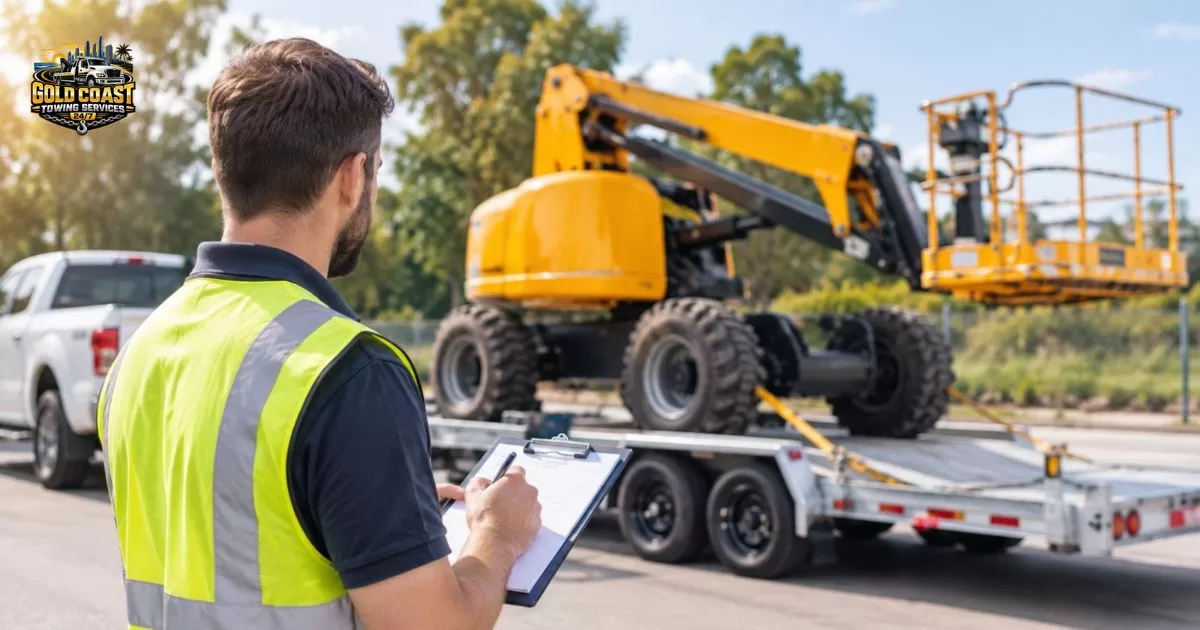
Trailer-Mounted vs Self-Propelled Boom Lifts: How Each Is Transported (and When You Can Tow One Yourself)
Boom lifts are useful pieces of equipment for construction, maintenance, electrical work and other jobs that require access to elevated areas. However, moving them from one worksite to another is not always straightforward. Their size, weight, design and transportation requirements can vary considerably depending on the type of machine.
A trailer-mounted boom lift and a self-propelled boom lift may perform similar jobs, but they are transported in very different ways. One is designed to be towed behind a suitable vehicle, while the other generally needs to be loaded onto a machinery transport trailer or truck.
For businesses and contractors in Brisbane, understanding these differences is important before arranging transportation. Brisbane Towing and Recovery — a trusted provider of towing services in Brisbane — shares practical information to help you understand boom lift transportation, towing requirements and when professional machinery transport is the better option. Read on!
Trailer-Mounted vs Self-Propelled Boom Lift Transport
When arranging boom lift transport in Brisbane, the first thing to consider is the type of equipment being moved. Here are some important points to understand before choosing a transportation method.
1. Understand the Difference Between the Two Boom Lifts
Although both machines are designed to lift workers and equipment to elevated working areas, their base structures are different.
A trailer-mounted boom lift is built onto a trailer chassis. It generally has wheels, a coupling and a drawbar, allowing it to be attached to a suitable towing vehicle.
A self-propelled boom lift has its own powered chassis and is designed to move around a worksite using its onboard controls. It may have rubber tyres, larger wheels or tracks, depending on the model.
The important difference is that a trailer-mounted lift is designed for towing, while a self-propelled lift is generally transported on a machinery trailer or truck.
2. How Trailer-Mounted Boom Lift Transport Works
Trailer-mounted boom lifts are generally easier to relocate between nearby worksites because they are designed to be towed.
The boom is lowered and secured in its designated travel position, stabilisers are retracted, and the trailer is connected to a suitable towing vehicle.
Before beginning trailer mounted boom lift transport, check the coupling, safety chains, tyres, lights, brakes and overall trailer condition.
The towing vehicle must also have sufficient capacity for the loaded trailer.
Not every passenger vehicle is suitable for towing every trailer-mounted boom lift. The machine's weight and the trailer's loaded mass need to be considered before making the journey.
3. Can You Tow a Trailer-Mounted Boom Lift Yourself?
Yes, in many cases, you can tow a trailer-mounted boom lift yourself, provided the trailer and towing vehicle meet the relevant requirements.
However, there are a few things to check before attaching the lift to your vehicle.
- Check the towing capacity of your vehicle.
- Confirm the loaded trailer weight.
- Make sure the coupling is compatible.
- Check that the trailer's brakes and lights work.
- Ensure the trailer is registered and roadworthy.
- Secure the boom and other moving components.
- Check that the load is within applicable mass and dimension limits.
Queensland road rules also require the driver to ensure the towing vehicle, trailer and coupling meet the relevant standards and loaded mass limits.
If you are unsure whether your vehicle can safely tow the machine, it is better to arrange professional transportation rather than take unnecessary risks.
4. Understand the Towable Boom Lift Licence Requirements
One common question is whether you need a special towable boom lift licence to transport a trailer-mounted lift.
There is an important distinction between a licence to tow a trailer and a licence to operate a boom lift.
For towing, the driver must hold an appropriate licence for the towing vehicle and comply with the applicable vehicle and trailer requirements. The permitted combination depends on the vehicle, its ratings and the relevant licensing rules.
A separate high-risk work licence may be required to operate certain boom lifts. In Queensland, a WP high-risk work licence is required to operate a boom-type elevating work platform with a boom length of 11 metres or more.
This operating licence is not the same as a driver's licence for towing the trailer.
So, before arranging transportation, check both the road-transport requirements and the operating licence requirements if the machine will also be used at the destination.
5. Why Self-Propelled Boom Lift Transport Is Different
Self-propelled boom lifts are designed to move around construction sites, industrial areas and other work environments. They are not generally designed to be towed behind an ordinary vehicle.
Their weight, dimensions, tyres, ground clearance and overall construction can make road transportation more complicated.
For self propelled boom lift transport, the machine is generally loaded onto a suitable machinery trailer, plant trailer or transport truck.
The transport equipment must have enough capacity to support the machine safely. Loading ramps, winches or other equipment may also be needed, depending on the machine's condition and access at the pickup location.
Trying to tow a self-propelled boom lift using an unsuitable connection or ordinary trailer can create serious safety risks.
6. Choose the Correct Machinery Transport Equipment
The transportation equipment should always match the boom lift being moved.
A smaller trailer-mounted lift may be transported using a suitable towing vehicle, while a larger self-propelled machine may require specialised machinery transport equipment.
Important factors to consider include:
- Overall machine weight
- Height, width and length
- Trailer load capacity
- Ramp strength and loading angle
- Tyre and track condition
- Available tie-down points
- Pickup and delivery access
Using unsuitable equipment can create problems during loading, transportation and unloading.
This is why the machine's make, model and dimensions should be provided before booking a transport service.
Recommended: Need machinery towing in Brisbane? Call 0438 155 555 for a tow quote!
7. Secure the Boom Lift Before Transportation
Whether you are moving a trailer-mounted or self-propelled boom lift, securing the machine properly is essential.
The boom should be fully lowered and positioned according to the manufacturer's transportation instructions. Any loose attachments or components should also be secured.
For trailer-mounted lifts, check the coupling, safety chains, brakes and stabilisers before travelling.
For self-propelled machines, use suitable load restraints at the designated securing points.
Incorrectly secured machinery can shift during sudden braking, cornering or uneven road conditions.
Professional boom lift transportation should ensure that the equipment remains stable from the moment it is loaded until it reaches its destination.
Read our other blogs as well:
How to Transport a Forklift in Brisbane: Towing Rules, Permits & Costs
Shipping a Tractor in Australia: How-to Guide, Cost, and More
Oversized Load Towing: Essentials and Expert Tips to Do It Right
Types of Tow Trucks: Everything You Need to Know
8. Check the Route and Transportation Requirements
The route should be considered before moving any large machinery.
A trailer-mounted boom lift may be relatively easy to tow, but its overall height, width and length still need to comply with road requirements.
Self-propelled boom lifts can be considerably heavier and may require a different route or transport arrangement.
Before beginning transportation, consider overhead structures, narrow access roads, low bridges, turning space and any applicable mass or dimension restrictions.
For larger machinery, additional approvals or route arrangements may be necessary.
Planning the route beforehand can help avoid unnecessary delays and transportation problems.
9. Consider the Cost of Boom Lift Transport
The cost of transporting a boom lift depends on the machine and the distance it needs to travel.
Several factors can affect the final price.
Machine size and weight: Larger and heavier boom lifts may require specialised machinery transport equipment.
Transportation distance: Moving equipment across Brisbane will generally involve different costs from transporting it to another part of Queensland.
Loading requirements: Non-operational machines may require winching or additional loading equipment.
Access conditions: Narrow entrances, uneven ground and difficult loading areas can make transportation more complicated.
Permits and approvals: Oversized or overweight loads may involve additional requirements and expenses.
When requesting a quote, provide the boom lift's make, model, dimensions, weight and pickup and delivery locations. This helps determine the most suitable transport method and expected cost.
10. Know When to Hire a Professional Transport Service
Towing a trailer-mounted boom lift yourself may be suitable when your vehicle has the correct towing capacity and all road requirements are met.
However, transporting a self-propelled boom lift is a different situation.
If the machinery is particularly heavy, oversized, non-operational or difficult to load, professional transportation is generally the more practical choice.
Experienced machinery transport operators will consider the equipment's dimensions, weight, condition, loading requirements and destination before arranging the move.
If you are unsure whether your vehicle and trailer are suitable, arranging professional self propelled boom lift transport can help avoid unnecessary transportation risks.
Trailer-Mounted vs Self-Propelled Boom Lifts: Which Is Easier to Transport?
Both types of boom lifts have their advantages, but their transportation requirements are quite different.
A trailer-mounted boom lift is generally easier to relocate because it is designed to be towed behind a suitable vehicle. It can be a practical option for businesses that regularly move smaller access equipment between nearby locations.
A self-propelled boom lift offers greater mobility around worksites but usually requires a dedicated transport vehicle or machinery trailer when moving between locations.
There is no single transportation method that works for every boom lift. The machine's design, weight, dimensions and manufacturer's instructions should determine how it is moved.
Get Professional Boom Lift Transport in Brisbane
Moving a boom lift is about more than simply connecting a trailer or loading machinery onto a truck. You need to consider the equipment's design, weight, dimensions, towing capacity, loading requirements and applicable road regulations.
Whether you have a trailer-mounted boom lift that needs to be relocated to another worksite or a self-propelled boom lift that requires specialised machinery transportation, choosing the right transport method can help minimise unnecessary delays and reduce the risk of damage.
Brisbane Towing & Recovery provides towing solutions for different vehicles, machinery and transportation requirements across Brisbane.
Call 0438 155 555 for a tow quote!
Also, check out the most popular services:
Accident towing services in Brisbane
Container towing services in Brisbane